
Rutba Inventory on film: a warehouse from goods in to buying again
A three minute film follows Northbank Trading, an invented wholesaler, through its stock, a warehouse laid out to the bin, a delivery received against its order, a draft purchase for what has run out, and the stock valued at cost.
· 2 min read

Every other part of a trading business asks the same question of its stock: how many, where, and is any of it promised already. Rutba Inventory is where that answer lives, and the till, the website and the order desk all read and reserve through it. The film below shows it at Northbank Trading, a London supplier to cafes and caterers that we made up for the purpose.
Rutba Inventory: stock, the warehouse and buying, from one set of records (3:07).
What is in stock
The start page shows what is on hand, what is on its way and what was bought lately. Every product carries its suppliers, price and stock, and one filter shows what has run out, so nobody walks the shelves to find out. The warehouse’s own view adds what the stock is worth at cost, and what was lost, damaged or written off, by cause.
The warehouse, zone to bin
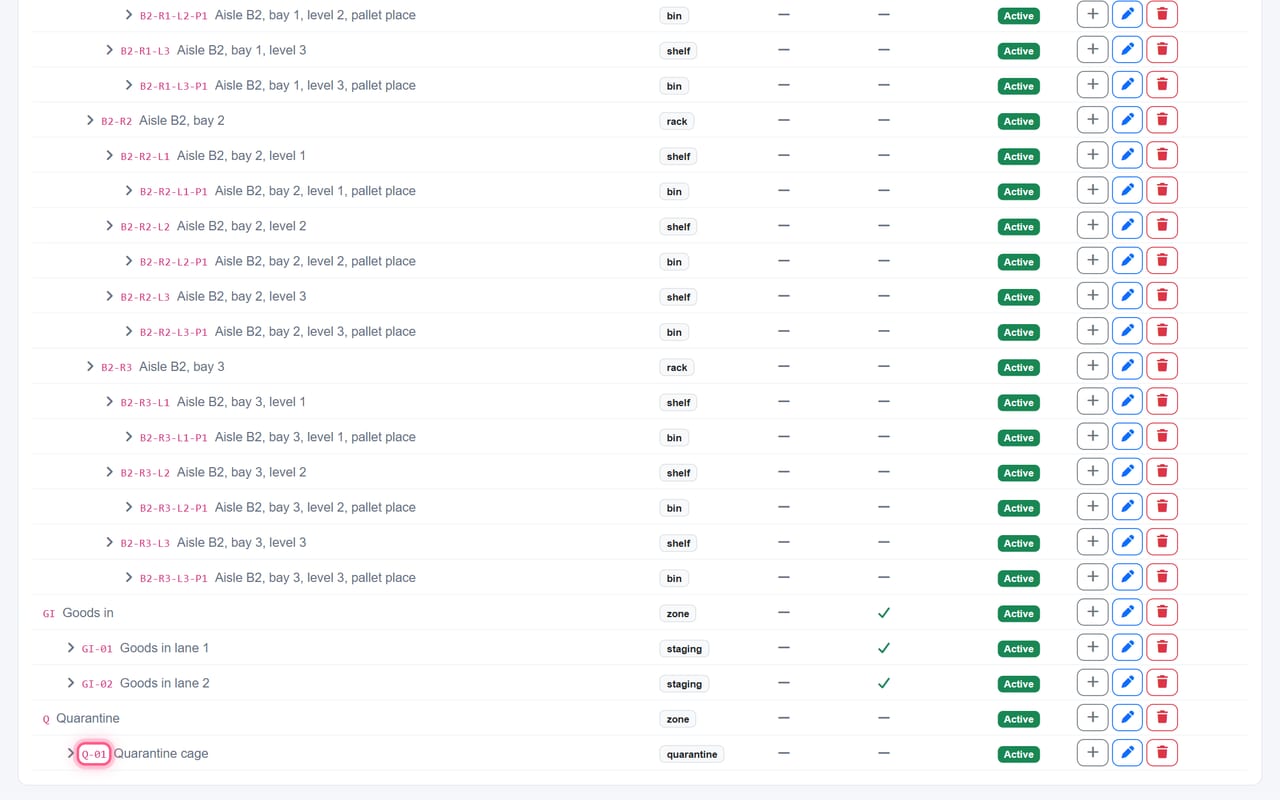
The warehouse is laid out as it stands: zones, aisles, racks, shelves and bins, each with a code. Deliveries land in goods-in lanes, and anything damaged or in doubt is held apart in a quarantine cage. Stock by location then gives every product with how many are on hand, how many are promised to orders and how many are free to sell.
Goods in
Purchase orders show the supplier, the total and where each stands; in the film five are on their way and one supplier has called its order off. When a delivery arrives, the order is opened and the quantity checked against what came. Receive books every unit in, each with its own record tied to the order it came on, and Procurement sees how much of each order has arrived, ready to match against the supplier’s bill.
Buying again
Reorder compares what is on hand and on order with each product’s minimum. Because the sesame oil order was cancelled, nothing is coming, so the screen suggests how many to buy and from whom and drafts the purchase in one step. Nothing is sent to a supplier until someone approves it.
What it is worth
Stock that goes missing or is damaged is written off unit by unit, at what it cost, so a loss can be traced. Valuation adds up every unit on hand at cost, by branch and by product, with the products that tie up the most money listed first.
Rutba Inventory
Stock levels, locations and valuation as the one record every other app reserves against.
See the product

