
Rutba Commerce on film: a corner shop’s website, its catalogue and its till
A three and a half minute film follows Larkspur Corner Store, an invented shop, from its website through the CMS behind it to a cash sale at the till and the day’s takings. Every price and stock figure on the way comes from one catalogue.
· 3 min read

A shop that sells online and over the counter usually runs two lists of products, and the two drift apart: a price changed on the till and not the website, a last jar sold twice. Rutba Commerce keeps one catalogue behind both. The film below shows it on Larkspur Corner Store, a shop we invented for it, with a year of made-up trading.
Rutba Commerce: one catalogue for your website and your shop’s till (3:37).
The shop online
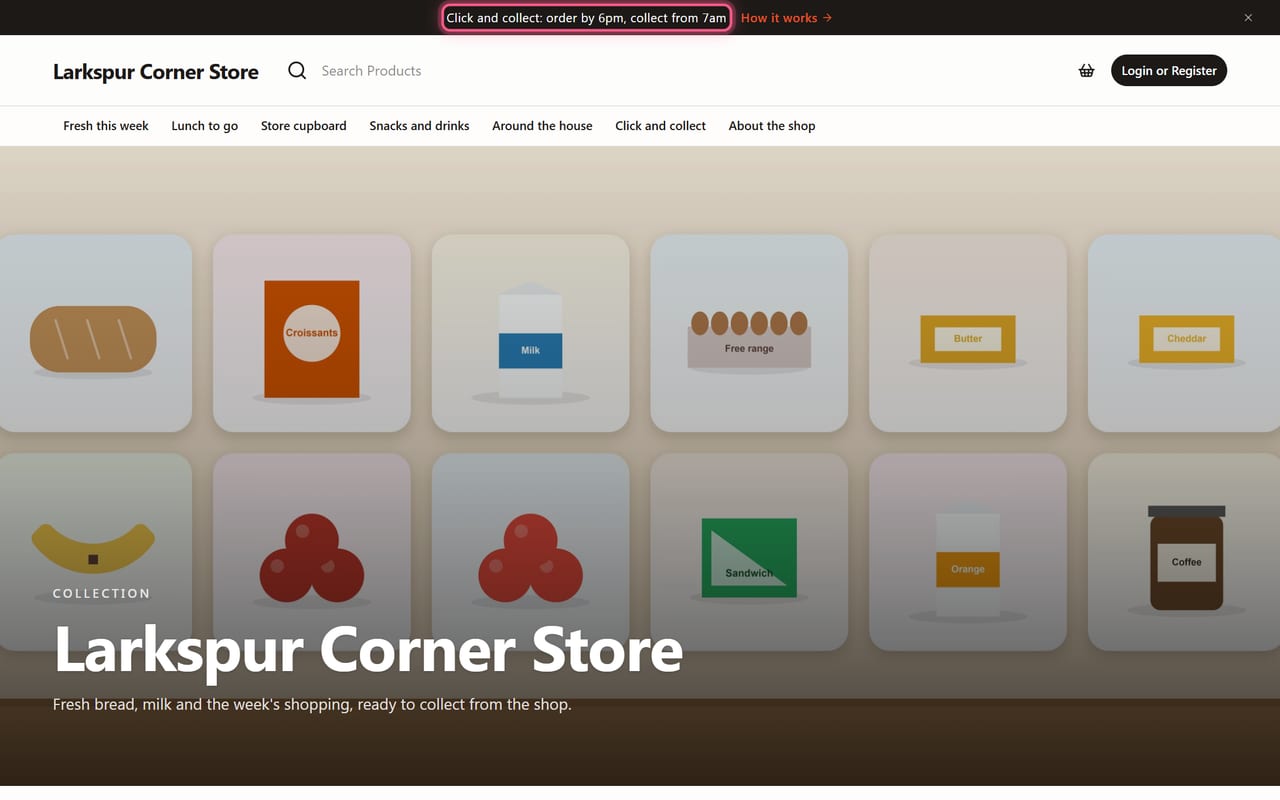
The film opens on Larkspur’s own website: a click and collect banner, then a shop window laid out in groups, each showing a few products and a link to the rest. A product page carries the summary and description the shop wrote, and Add to cart opens the bag at the side. Customers can pay online or when they collect.
The catalogue behind it
Behind the website is the CMS. Products lists the 41 things Larkspur sells, with the price, the stock on hand and whether each is published, and search finds one by name, code or barcode. Change a price on a product and save, and the website and the till both charge it. Product groups make up the shop window, in the order you drag them into, and the home page is an ordinary page whose blocks can be reordered and previewed as a draft before anyone sees them.
The till
The first time the point of sale opens on a computer it asks which branch and which desk it is. Each day starts by opening the register with the float in the drawer, and the till remembers what the last register left, so a float that does not match is spotted before the first sale. A product is found by barcode or part of its name, with its stock beside it, counted from the same stock the website shows. For cash, type what was handed over and the change is worked out; a sale can be split across cash and card.
The till works out nothing on its own: the total comes from the server, which is the argument of an earlier post about the till.
What the day took
Every sale is listed with its receipt number, time and whether it is paid, and a past sale opens on the same screen for a return or a reprint. Each register is kept with what the drawer should have held and what was counted at closing. In the film one day comes out twenty pence short, and it stands out so the shop can look into it that day. Reports add up takings per day and how customers paid for any period, with returns counted against them.
Rutba Commerce
Storefront, CMS and point of sale from one catalogue, with stock read from Rutba Inventory.
See the product

