
Rutba Fleet on film: which vans may go out, and the lorry the wrong licence cannot take
A three and a half minute film follows Kilnside Builders, an invented building firm with seven vehicles: a board of what is legal to go out, a tipper kept in by lapsed insurance, and a lorry check-out refused because the licence does not cover it.
· 2 min read

A vehicle that goes out with no insurance, or a driver whose licence does not cover it, is the kind of mistake a small firm makes on a busy morning. Rutba Fleet keeps every vehicle’s statutory dates and every driver’s licence, and refuses the check-out that would break the rules. The film below shows it at Kilnside Builders, an invented firm with four crews in Bristol and seven vehicles, from small vans to a crane lorry.
Rutba Fleet: the vans, the drivers, and who may take what (3:29).
Is it legal to go out?
Fleet opens on that question: six of the seven are, two defects are open, and ten people are on record as drivers. A table counts the dates the law cares about for every vehicle and licence, and a date nobody entered counts as missing, never as fine. The due list beside it has the tipper’s insurance, three days lapsed, and a van’s annual test in nine days.
The tipper’s page says it plainly at the top: it cannot go out, for its insurance and for an open defect. The busiest van’s page gives its distance over ninety days and its fuel at about sixteen pence a kilometre, and says what that figure leaves out, so nobody takes it for the whole cost of running a van.
Taking the lorry
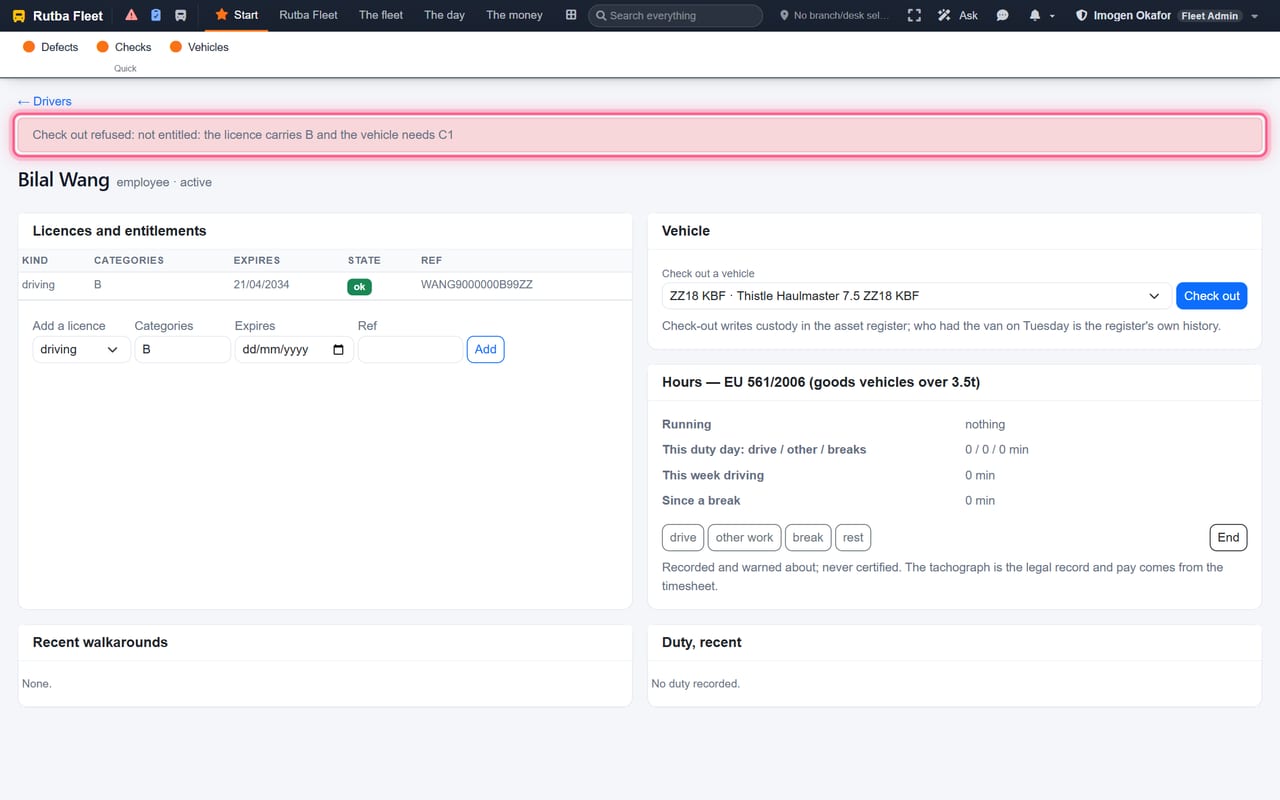
Every driver’s licence is on record with its categories and expiry. A load of bricks has to go to site on the 7.5 tonne crane lorry, and the office tries to check it out to a driver who is free. Fleet refuses: his licence carries category B, and the lorry needs C1. A crew lead with C1 already has a van, so he checks the van back in and takes the lorry instead. The check-out is written to the asset register too, so who had which vehicle on which day stays on record.
Defects and fuel
The defects page lists every fault reported this year with its severity and how quickly it was cleared. Every fill of fuel is recorded against its vehicle with litres and mileage. And back on the start page nothing has dropped off: the tipper’s insurance stays at the top of the due list until somebody renews it.
The business, its crews, its drivers and its registration numbers are all invented for the film.


