
Rutba CRM on film: leads, calls and a late delivery on one customer record
A three minute film follows the sales team of Northbank Trading, an invented wholesaler, from a board of leads to a logged call, then a customer’s question about a late order answered in Helpdesk, with every step landing on the same contact page.
· 2 min read

The usual way a customer gets asked the same question twice is that sales and support keep separate notes. Rutba CRM keeps contacts, leads, orders and support tickets on one record. The film below shows it at Northbank Trading, an invented supplier of dry goods to cafes, delis, hotels and caterers, with four sales reps and a support desk.
Rutba CRM: every customer, every deal, one place (3:17).
The pipeline
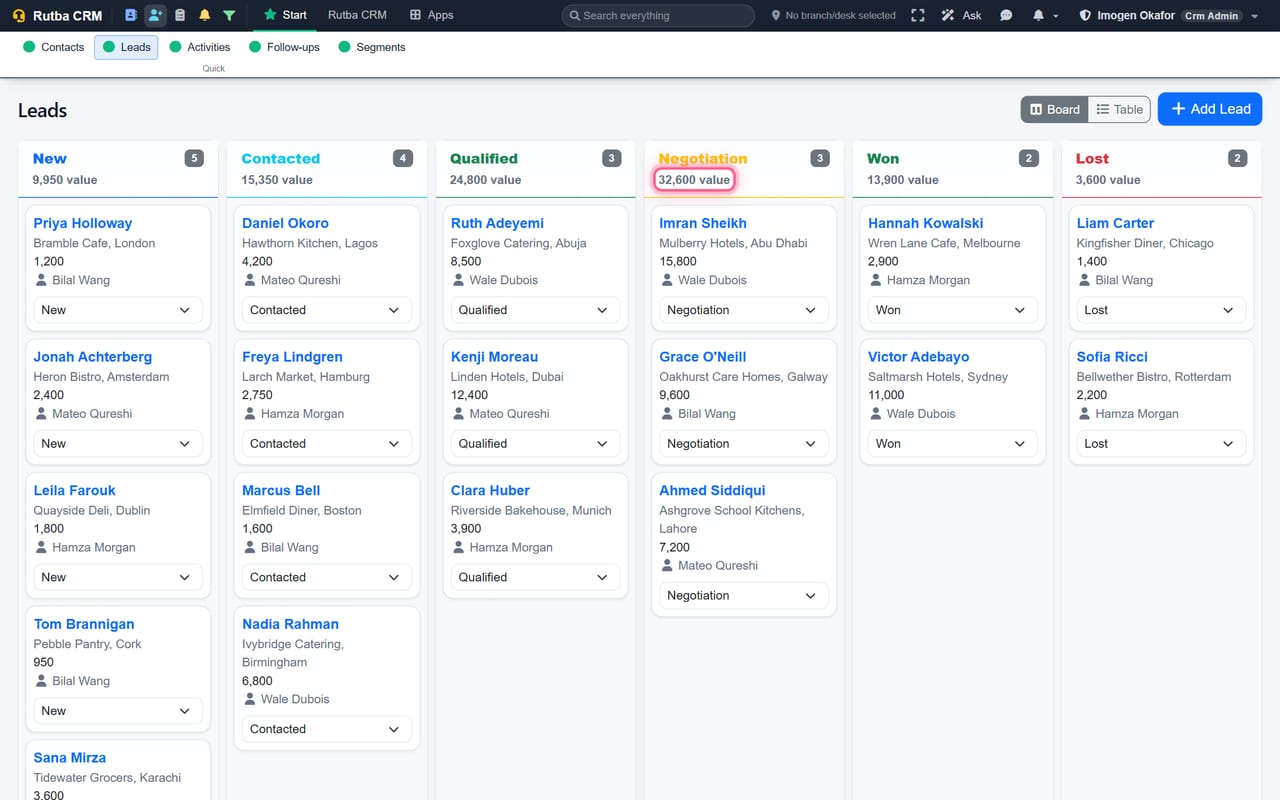
The start page shows the open leads and what they are worth, the win rate, and the calls already booked for the coming days. Every lead sits on a board by stage, from New to Won, with each column’s value under its name and each card showing who owns it. When a deal moves on, its stage is changed on the card and the totals follow.
A deal’s history
Each lead keeps its own history: the first call, the visit, the quote, the talk about payment terms. A new call is logged in a few seconds with a date to follow it up. Follow-ups gathers every reminder in one list, the overdue first, and marking one done takes it off the list while the call stays in the lead’s history.
One customer, one record
A contact page holds a customer’s whole history, from the first visit to the latest call, with tickets and orders below. In the film, Hollybrook Deli’s latest order is out for delivery and they have written in to ask where it is; their two older tickets were closed in the summer.
The support desk
Questions arrive in Rutba Helpdesk, whose start page counts the tickets nobody has picked up and those waiting on a customer. An agent claims Hollybrook’s ticket from the list, adds an internal note for colleagues that never reaches the customer, and replies that the order should arrive that afternoon. The ticket then waits on the customer, not on the team, and the new state shows on the CRM record for whoever picks up the phone next.


